Some people have seen every specialist on the list. They have had the tests, followed the treatment plans, and done everything right by conventional standards. And yet something still feels off. The fatigue that never fully lifts. The tension that lives in the chest for no diagnosable reason. The sense that the real root of what they are experiencing has never quite been found.
This is exactly where medical intuitive healing begins.
Research in psychoneuroimmunology has confirmed what many healing traditions have known for centuries: unresolved stress and emotional tension directly suppress immune function. The connection between what we carry emotionally and what shows up physically is not alternative theory anymore. It is peer-reviewed science. A medical intuitive near you works precisely at this intersection, listening to the messages the body sends long before they become something a lab test can measure.
What a Medical Intuitive Actually Does?
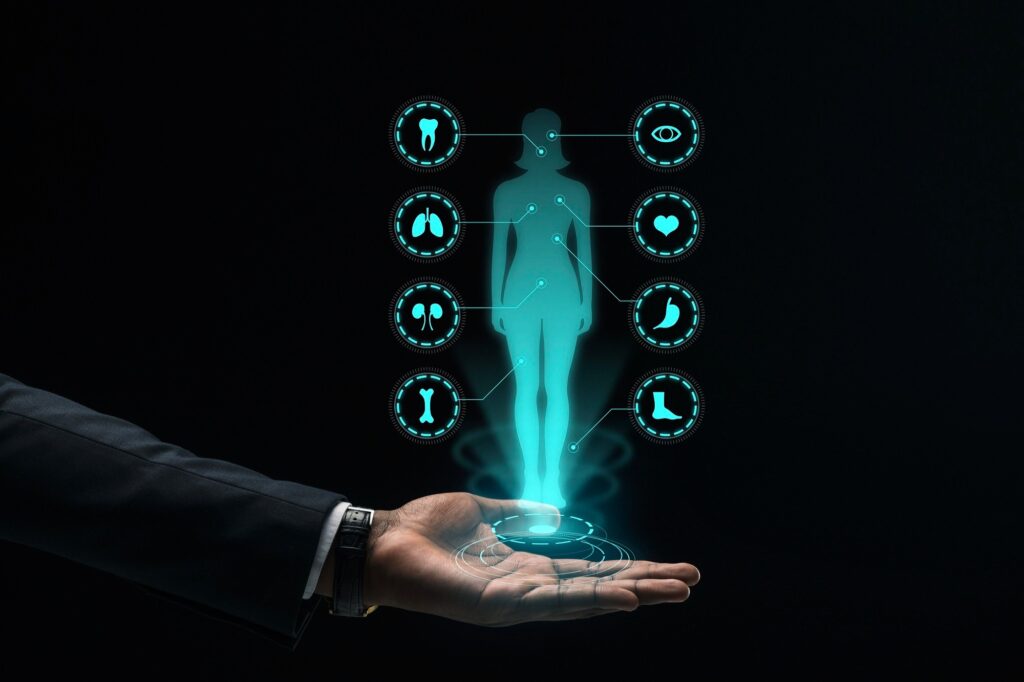
A medical intuitive is a practitioner who uses heightened intuitive perception to scan the body’s energetic field and identify imbalances connected to physical symptoms, emotional patterns, or unresolved experiences. It is not fortune-telling. It is not a psychic reading. It is a structured, health-focused assessment of the body’s energy systems, approached with the same intentionality a skilled clinician brings to any form of evaluation.
Three types of disturbances tend to show up in this kind of work.
- The first is emotional and mental patterns, where unresolved feelings or habitual thought patterns create energetic blockages that eventually express themselves physically.
- The second is spiritual disconnection, where a lack of alignment with one’s deeper purpose or sense of meaning manifests in the body as chronic tension or fatigue.
- The third is environmental and lifestyle factors, where external stressors, toxic exposures, or relational patterns quietly disrupt the body’s energetic equilibrium.
This practice has ancient roots. Shamans and healers across cultures used intuitive scanning long before it carried a clinical name. Figures like Edgar Cayce and Caroline Myss helped bring it into a modern framework that more people could access and understand.
From the perspective of an acupuncture and Reiki practitioner, intuitive assessment is a natural extension of the work. In classical Chinese medicine, qi stagnation along specific meridian channels produces physical symptoms long before they are structurally visible. A medical intuitive and a meridian-based acupuncturist are, in many ways, reading the same underlying language of the body.
How Medical Intuitive Healing Fits Within the Broader Landscape of Care?
| Modality | What it Addresses | How it Works | Best Suited For | Works Alongside? |
| Medical intuitive healing | Energetic root causes of physical and emotional symptoms | Intuitive scanning of body, biofield, chakras, and emotional patterns | Unexplained pain, chronic fatigue, anxiety, emotional blocks | All modalities, acts as a catalyst |
| Acupuncture | Meridian imbalances affecting organs and systems | Fine needles stimulate qi flow along specific channels | Pain, inflammation, stress, digestive and hormonal issues | Yes, complements intuitive work |
| Reiki | Energetic blockages in the biofield and chakras | Channels universal life force energy through the practitioner | Stress, emotional release, nervous system regulation | Yes, often integrated in sessions |
| Conventional medicine | Diagnosable physical conditions | Physical examination, tests, medication, procedures | Acute illness, injury, measurable conditions | Yes, always recommended alongside |
| Talk therapy | Conscious emotional and psychological patterns | Verbal processing, cognitive and behavioural tools | Anxiety, trauma, relationship patterns | Yes, addresses a different layer |
What to Expect From a Medical Intuitive Healing Session?

No two sessions are the same, and that is by design. Every person arrives with a unique constellation of experiences, patterns, and needs. Here is how the work typically unfolds.
It begins with genuine connection. Before any scanning starts, time is spent understanding the full picture: symptoms, history, stress levels, sleep quality, nutrition, environment, and relationships. Nothing is considered irrelevant, because nothing truly is.
From there, the intuitive assessment begins. Using clairsentience, claircognizance, and clairvoyance, the body’s energetic field is scanned for areas of imbalance or restriction. Impressions arrive as feelings, images, or a direct sense of knowing. Chakras, organs, and emotional layers are all part of what is assessed. The body, when given space to be heard, has a remarkable amount to communicate.
Once insights are gathered, they are shared openly and conversationally. Clients are always invited into the dialogue. Recognition itself is often the beginning of healing. When something that has been held silently in the body for years is finally named, there is frequently an immediate sense of relief.
The session then moves into intuitive energy healing. This involves clearing identified blockages, releasing energies that do not belong to the client, and gently addressing patterns held from past experiences. The intention throughout is always the same: to restore flow, ease, and the body’s own natural capacity to heal itself.
Holistic recommendations follow naturally from what emerges, and may include lifestyle adjustments, nutritional considerations, specific micronutrients, emotional practices, or spiritual tools. These are always framed as complementary to conventional medical care, never as a replacement for it.
One client comes to mind clearly. She arrived carrying a grief that had no clean name, a counselor in her community had taken their own life the previous year, and the shockwave of it had never fully settled. As someone responsible for leading children and students, she described a quiet but relentless fear: was she strong enough, present enough, safe enough to hold the people who depended on her? Intuitive assessment revealed a deeply destabilized pelvis, the body’s energetic seat of safety, groundedness, and belonging, and a pattern of looking backward at pain rather than drawing strength from the present. She had been living in the weight of what had happened rather than in the power of who she could choose to be now. Over the course of her sessions, that orientation began to shift. The fear softened. The sense of being unrooted gave way to something steadier. She described leaving with a clarity she had not expected: not just relief, but a renewed sense of purpose about the kind of leader she wanted to become for the people in her care.
Why This Is Not as Alternative as It Sounds?
The science here is more substantial than many people expect.
Psychoneuroimmunology, a well-established field of research, has demonstrated that unresolved stress and emotional suppression directly impair immune function. This is not fringe science. It is published, peer-reviewed, and increasingly integrated into mainstream medical thinking.
Broken Heart Syndrome, clinically known as Takotsubo cardiomyopathy, offers one of the most striking examples. Severe emotional shock or trauma can produce measurable cardiac symptoms that mirror a heart attack, with no structural damage to explain them. Emotion creating physical pathology, documented in medical literature.
The acupuncture meridian system offers another parallel. In classical Chinese medicine, qi stagnation along specific channels produces physical dysfunction long before it becomes structurally detectable. A medical intuitive and an acupuncturist are both working at the energetic layer of the body, before symptoms consolidate into something a scan can find.
Deepak Chopra’s description of atomic structure captures it elegantly. The distance between the nucleus of an atom and its closest electron is, relatively speaking, equivalent to the distance between the Earth and the Sun. The body is overwhelmingly space and energy. Working at the energetic level is not working around the physical. It is working at its very foundation.
The Body Has Been Trying to Tell You Something
Chronic, unexplained symptoms are not random. They are signals from a system that hasn’t been fully heard yet.
At Mindful Healing Heart, listening is where everything begins. Each session is guided by trained skill, deep presence, and respect for the body’s innate intelligence. Whether you’re navigating unexplained physical symptoms, emotional weight held in the body, or a quiet sense that something deeper needs attention, this is a space where it can be explored with care.
Ready to Understand What Your Body Is Saying?
If you feel drawn to this work and want to explore whether it’s right for you, start with a free discovery call.
No pressure. No expectations. Just a genuine conversation about where you are and what could support you next.
Take the first step toward clarity and healing today.
Frequently Asked Questions
Sessions typically follow five stages: an initial health discussion, an intuitive scan of the body’s energy field, a shared dialogue of insights, an energy healing component, and practical recommendations. The experience is calm, conversational, and often leaves clients feeling clearer and lighter.
Intuitive scanning itself is not backed by large clinical trials. However, related principles like the mind body connection are supported by fields such as psychoneuroimmunology, which links emotional states to physical health. The work sits at this intersection with transparency.
A medical intuitive focuses specifically on physical and energetic health. The work is structured, grounded, and health oriented. It does not involve prediction or communication with the deceased, but rather understanding what the living body is expressing.
Yes, and it is encouraged. This work complements conventional medicine by addressing emotional and energetic layers, while continuing to support medical diagnoses and treatments from licensed professionals.
Look for training in established modalities like Reiki or acupuncture, proper certification, transparency about limitations, and a strong emphasis on working alongside conventional medicine. These are key indicators of a reliable practitioner.