Quick Overview
Cortisol weight gain happens when chronic stress keeps the body’s stress hormone elevated, encouraging fat storage around the midsection, increasing cravings, and slowing metabolism, regardless of diet or exercise effort. Weight loss acupuncture is designed to support the underlying stress response, not just calorie intake.
- Chronically elevated cortisol is linked to increased abdominal fat storage, even in people who are otherwise lean
- Cortisol raises ghrelin (hunger hormone) and suppresses leptin (fullness hormone), driving cravings for high-fat, high-sugar foods
- Elevated cortisol is catabolic, meaning it can break down muscle tissue, which slows metabolism over time
- “Eat less, move more” alone doesn’t address a dysregulated stress response, which is why some diets stop working
- Weight loss acupuncture is designed to support nervous system regulation alongside, not instead of, sustainable lifestyle habits
Introduction
Many people believe that weight gain comes down to eating too much or exercising too little. While nutrition and physical activity are certainly important, they’re not always the whole story. For some people, the missing piece is chronic stress and the way it affects the nervous system.
One well-known study from Yale University found that lean women with a heightened stress response carried more abdominal fat and had higher cortisol levels than women who were less stress-reactive, despite having a normal body weight. The findings suggest that how the body responds to stress may influence where fat is stored, not simply how much a person weighs.
This doesn’t mean cortisol is solely responsible for weight gain, nor does it mean stress alone causes obesity. Weight regulation is complex and influenced by genetics, hormones, sleep, nutrition, physical activity, medications, and many other factors. However, growing research suggests that chronic stress and an overactive nervous system may contribute to changes in metabolism, appetite, and fat storage for some individuals. This guide explores how cortisol and the nervous system are connected to weight, and how acupuncture, Reiki, and a whole-person approach may help support healthier balance alongside nutrition, movement, and appropriate medical care.
Why “Eat Less, Move More” Doesn’t Fix Cortisol Weight Gain
Healthy eating and regular exercise are essential for overall health, but they may not fully address weight gain when chronic stress and nervous system dysregulation are significant contributors.
Many people find this especially frustrating. They’re eating well, staying active, and doing everything they believe they should, yet the weight, particularly around the abdomen, refuses to budge. This isn’t simply a matter of willpower. Research suggests that prolonged elevation of cortisol, the body’s primary stress hormone, may influence metabolism, appetite, insulin sensitivity, and where fat is stored. Chronic stress can also increase cravings for calorie-dense foods, disrupt sleep, and make it more difficult to maintain healthy muscle mass, all of which can affect long-term weight regulation.
This doesn’t mean cortisol is the only cause of stubborn weight gain. Body weight is influenced by many factors, including genetics, hormones, nutrition, physical activity, medications, sleep, and underlying medical conditions. However, for some individuals, an overactive nervous system may become an important piece of the puzzle.
At Mindful Healing Heart, Dr. Winnie Chan Wang takes a whole-person approach that considers not only nutrition and movement, but also stress, sleep quality, nervous system regulation, digestion, and hormonal balance. Rather than asking only, “How can we lose weight?” She also explores, “What is your body responding to?” Supporting the nervous system may help create an internal environment where healthy lifestyle changes can work more effectively over time.
How Chronic Stress Signals the Body to Store Fat
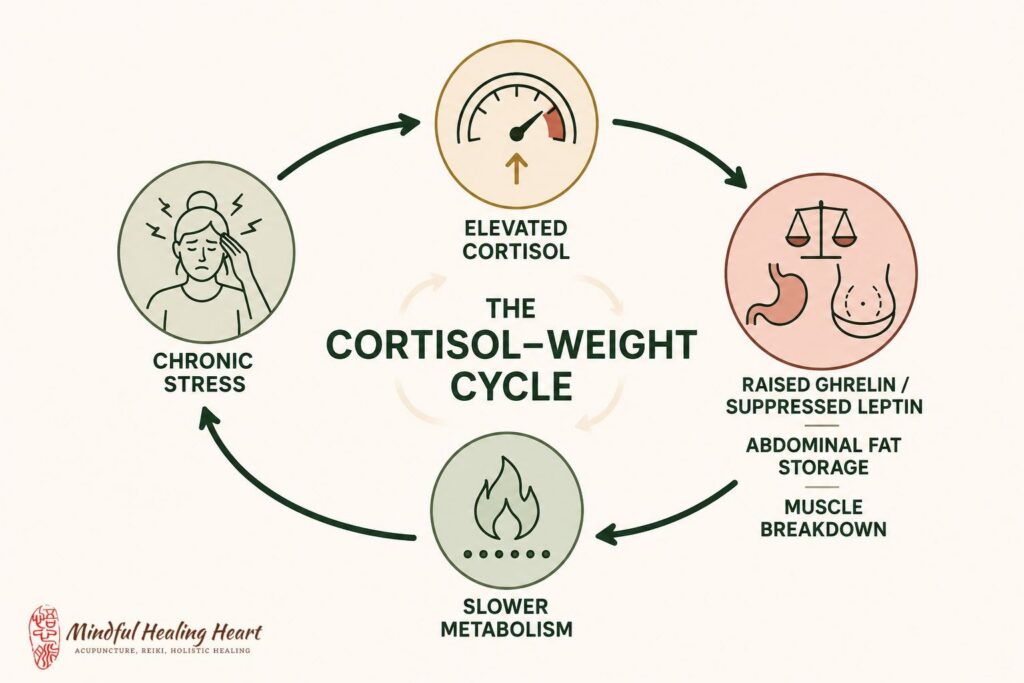
Chronic stress affects weight through the HPA axis, the body’s central stress response system, which keeps cortisol elevated far longer than it was ever meant to circulate.
Think of cortisol as a hormone built for short-term survival. In a genuine emergency, it mobilizes energy quickly, useful for outrunning an actual threat. The trouble starts when the “threat” is a demanding job, financial pressure, or a mind that won’t quiet down at 11 p.m., stressors with no clear finish line. The HPA axis doesn’t distinguish well between a real emergency and a slow-burning one. It just keeps the alarm running, and cortisol keeps circulating.
Sustained cortisol does a few specific things worth naming plainly. It raises ghrelin, the hormone that signals hunger, while suppressing leptin, the hormone that signals fullness, which is part of why stress eating so often reaches for something sweet or fried rather than a salad. It also encourages the body to store fat centrally, around the abdomen, rather than distributing it more evenly. And because elevated cortisol is catabolic, it can gradually break down muscle tissue, and less muscle means a slower resting metabolism. None of this reflects a lack of discipline. It reflects a body doing exactly what a stress hormone tells it to do.
Readers wanting a deeper look at how this same stress-response pattern shows up across the body can find more detail in the pillar guide on stress and anxiety.
Where Weight Loss Acupuncture Actually Fits
Weight loss acupuncture is not a spot-treatment aimed at a stubborn area. It’s designed to support the nervous system’s ability to shift out of the heightened state that’s been driving cortisol in the first place.

Using very fine, sterile needles at carefully selected points, treatment aims to encourage the body toward a calmer, more parasympathetic state, supporting healthy digestion, circulation, and the nervous system regulation that chronic stress disrupts. From a Traditional Chinese Medicine (TCM) perspective, this pattern is often understood through the Spleen system, associated in TCM with digestion and the transformation of food into usable energy, and the Liver system, associated with the smooth flow of Qi (energy) and emotional balance. These are traditional frameworks rather than diagnosed medical conditions, offered here alongside, not instead of, what research shows about cortisol’s effect on appetite and fat storage.
A Real Clinical Picture
One client came to Mindful Healing Heart after years of cycling through restrictive diets that seemed to work for a short time before the weight gradually returned, most noticeably around her abdomen. She was frustrated because she was eating well, exercising regularly, and doing everything she thought she was supposed to do, yet the results never lasted.
As Dr. Winnie Chan Wang learned more about her health, a broader pattern emerged. Her work was demanding, meals were often skipped during the day, evenings ended with stress-driven eating, and restful sleep had become rare. Rather than focusing only on the number on the scale, Dr. Winnie Chan Wang recognized that chronic stress, disrupted eating patterns, and an overactive nervous system were all affecting her overall well-being.
Her personalized treatment combined acupuncture to support nervous system regulation, healthy digestion, and balanced energy with Reiki to encourage deeper relaxation and recovery. Over the following months, she noticed fewer evening cravings, steadier energy throughout the day, better sleep, and a healthier relationship with food. She also experienced gradual, sustainable changes that felt very different from the repeated cycle of rapid weight loss and regain she had experienced in the past.
While every person’s experience is unique and individual results vary, this reflects a pattern Dr. Winnie Chan Wang often sees in practice: when the nervous system becomes more regulated, healthy lifestyle changes are often easier to maintain, creating a stronger foundation for long-term health and sustainable weight management.
Those exploring this approach further can learn more on the Weight Loss Acupuncture in Pasadena guide.
3 Realistic Habit Shifts for High Cortisol Weight Gain
Small, sustainable changes tend to support a calmer stress response far more effectively than restrictive rules, which often backfire by adding pressure to an already taxed nervous system.

- Eat something within an hour of waking. Skipping breakfast under stress can push cortisol higher through the morning; a modest, protein-containing meal helps signal safety to the body early in the day.
- Protect the transition into evening. A short walk, a few minutes of slow breathing, or simply stepping away from screens before dinner gives the nervous system a chance to shift out of the day’s alert mode before stress eating has a chance to take over.
- Prioritize consistent sleep timing over sleep perfection. Going to bed and waking at roughly the same time, even imperfectly, supports the body’s cortisol rhythm more than chasing an ideal number of hours.
None of these habits require restriction, and none of them work in isolation from a nervous system that’s still running hot. They’re meant to support the deeper work, not replace it.
Safety and Realistic Expectations
Weight loss acupuncture is designed to complement, not replace, appropriate medical care, particularly for anyone managing a diagnosed hormonal or metabolic condition. Significant, unexplained weight changes are always worth discussing with a physician first, since they can occasionally point to conditions acupuncture alone isn’t equipped to identify.
Results vary meaningfully by individual, and there is no guaranteed outcome or timeline. What can be offered honestly is a supportive, personalized approach that treats stress-driven weight gain as a whole-body pattern rather than a willpower failure, which many clients find is where real, sustainable change tends to start.
A Grounded Next Step in Pasadena
Weight changes can be frustrating, especially when eating less and exercising more do not seem to produce the results expected. When stress, sleep, and other factors are also part of the picture, taking a broader view may be more helpful than continuing to focus only on restriction.
Mindful Healing Heart provides acupuncture and holistic wellness support through an integrated approach to physical and emotional wellbeing. Winnie Chan Wang, MSOM, L.Ac. combines an MIT engineering background with training in Traditional Chinese Medicine, Reiki, and Medical Intuition, bringing a broader perspective to the factors that may influence health and wellness.
For anyone who has been trying to understand persistent weight changes and wants to explore supportive approaches alongside healthy lifestyle habits, learn more about Mindful Healing Heart or schedule a weight loss acupuncture consultation. A conversation can be the starting point for understanding whether this approach is a good fit.
Frequently Asked Questions
1. What is cortisol weight gain?
Cortisol weight gain refers to weight gain that may be influenced by chronically elevated levels of cortisol, the body’s primary stress hormone. Research suggests that prolonged stress can affect appetite, insulin sensitivity, metabolism, and where fat is stored, with some people experiencing increased fat accumulation around the abdomen. Cortisol is rarely the only factor involved, genetics, hormones, sleep, nutrition, physical activity, medications, and underlying health conditions also play important roles.
2. How do I stop cortisol weight gain?
Managing stress-related weight gain involves more than simply eating less. Supporting your nervous system through consistent sleep, regular nourishing meals, physical activity you can sustain, and healthy stress-management practices may help promote a healthier hormonal environment. Because weight is influenced by many factors, including nutrition, hormones, genetics, medications, and medical conditions, a comprehensive approach is often most effective.
3. Can stress really cause weight gain even if I’m eating well?
Yes, it can contribute. Research suggests that chronic stress and persistently elevated cortisol may influence appetite, insulin sensitivity, metabolism, and where the body stores fat, even in people who are eating a healthy diet. However, stress is rarely the only factor. Weight is also affected by genetics, hormones, sleep, physical activity, medications, and underlying medical conditions.
4. How is weight loss acupuncture different from dieting?
Unlike dieting, which primarily focuses on reducing calorie intake, weight loss acupuncture takes a whole-person approach. At Mindful Healing Heart, Dr. Winnie Chan Wang looks at factors that may influence weight, including stress, sleep, digestion, hormones, energy levels, and nervous system regulation. Personalized acupuncture, combined with Traditional Chinese Medicine and Reiki, is used to support the body’s natural regulatory processes alongside sustainable nutrition, physical activity, and healthy lifestyle habits. Rather than relying on restrictive dieting alone, the goal is to create a healthier internal environment that supports long-term well-being and sustainable weight management.
5. Is weight loss acupuncture available near Arcadia, Altadena, or Sierra Madre?
Yes. Mindful Healing Heart in Pasadena welcomes clients from Arcadia, Altadena, Sierra Madre, San Marino, Monrovia, Temple City, and the greater San Gabriel Valley, with remote Reiki sessions also available for those unable to visit in person.