Quick Overview
Reiki-infused acupuncture brings together two complementary healing approaches in a single, personalized session. Acupuncture uses precise stimulation of specific points on the body to support circulation, regulate the nervous system, and encourage the body’s natural healing processes, while Reiki offers gentle energetic support that promotes deep relaxation and overall well-being. Each therapy has its own growing body of research, and together they provide a holistic approach that addresses both the physical and energetic aspects of health.
At Mindful Healing Heart, this integrated approach is designed to help calm the nervous system while supporting areas where stress, tension, pain, and imbalance are often held, creating a gentle, whole-person healing experience tailored to each client’s unique needs.
Why Combine Reiki With Acupuncture in the First Place?

Although Reiki and acupuncture originated in different healing traditions, they share a similar philosophy: supporting the body’s natural flow of vital energy and restoring balance. In Traditional Chinese Medicine, this vital energy is known as qi (chee), while in the Japanese practice of Reiki it is called ki. While each system has its own history, techniques, and theoretical framework, both are based on the idea that health is supported when this life force flows freely and that physical or emotional challenges may arise when balance is disrupted. By combining Reiki’s gentle energetic support with acupuncture’s precise stimulation of specific points, Dr. Winnie Chan Wang creates a personalized treatment that addresses both the physical and energetic aspects of healing. The goal is to encourage deep relaxation, support nervous system regulation, and create an environment where the body can naturally move toward greater balance and well-being.
Acupuncture and Reiki support healing in different yet complementary ways. Acupuncture involves the gentle insertion of very fine, sterile needles into specific points along the body’s meridians. Research suggests acupuncture may help regulate the nervous system, improve circulation, influence pain-modulating pathways, and support the body’s natural healing processes. Reiki takes a different approach. During a Reiki session, the practitioner gently places their hands on or just above the body, creating a calming environment intended to support relaxation, emotional well-being, and the body’s natural capacity to restore balance. Rather than focusing on specific acupuncture points, Reiki is a whole-person practice that complements acupuncture by encouraging a deep state of rest and helping clients feel more centered and at ease. Together, these therapies offer a comprehensive approach that supports both the physical and emotional aspects of healing.
What’s Actually Happening in the Body?
The Nervous System Connection
Chronic stress keeps the body locked in a fight-or-flight response. Over time, that state makes it harder to sleep, digest, regulate hormones, and recover physically, because the nervous system never fully gets the signal that it’s safe to rest.
This is where Reiki and acupuncture often complement one another. Acupuncture has been studied for its effects on the autonomic nervous system and its potential to help shift the body from a heightened stress response toward a more balanced, regulated state. Reiki also encourages deep relaxation, although it does so through gentle touch or hands-above techniques that foster a calming, supportive environment. When these therapies are thoughtfully integrated in the same session, many clients describe experiencing a profound sense of relaxation and restoration. They may notice their breathing becoming slower, muscles softening, and a greater sense of ease throughout the body. While every person’s experience is unique, combining Reiki with acupuncture can provide a comprehensive approach that supports both the physical and emotional aspects of healing, creating space for the body and nervous system to naturally restore balance.
Where Stress Actually Lives
Emotional stress and physical tension aren’t as separate as they’re often treated. Years of pushing through difficulty, unprocessed grief, or chronic overwhelm don’t just stay in the mind. They store themselves in tissue, the jaw, the shoulders, the gut, the hips. That’s part of why talk-based approaches alone can leave someone feeling like they understand a problem intellectually but still carry it physically every morning.
Acupuncture is built to work directly with those physical storage sites. Reiki works alongside it at the energetic level, supporting the release of the patterns underneath the physical tension rather than just the tension itself. Addressing both layers together is part of why this integrated approach can reach places that a single-modality session sometimes can’t.
What Does the Research Say?
Reiki and acupuncture are each accumulating independent scientific support, even though the mechanism connecting them isn’t fully mapped yet.
Stress and the relaxation response. This is where evidence is strongest for both practices individually. Elevated stress hormones interfere with sleep, digestion, immune function, and emotional resilience. Both acupuncture and Reiki appear to activate the body’s relaxation response, which matters given how many common concerns, anxiety, insomnia, digestive discomfort, chronic pain, burnout, trace back to a nervous system that’s stuck switched on.
Pain. Pain is rarely only physical. It affects sleep, mood, energy, and relationships. Acupuncture has a well-documented history in pain management, and several studies suggest Reiki may further ease the perception of pain and improve comfort when layered alongside it. Clients often describe not just less pain, but a greater capacity to cope with what remains.
Sleep. Sleep is one of the body’s primary healing mechanisms, and one of the first things to break down under chronic stress. Combining the physical regulation of acupuncture with the deep rest state Reiki tends to encourage is one reason improved sleep is among the most consistently reported outcomes.
Hormonal and reproductive health. Acupuncture has a long history of use for fertility, menstrual regulation, and perimenopause support, largely through its effects on circulation and the endocrine system. Reiki’s role in restoring energetic flow through those same pathways is thought to complement that work, which is part of why this integrated approach is often sought out for hormonal and reproductive concerns specifically.
Emotional balance. Grief, burnout, caregiving fatigue, and ordinary accumulated stress all take a toll that doesn’t always have a clear physical diagnosis. Both modalities offer something simple and easy to underestimate: real permission to pause. When emotion surfaces during a session, that isn’t a sign of something going wrong. It’s often described as one of the more relieving parts of the process.
If Energy Can’t Be Measured Directly, Why Do People Feel Better?

This is a thoughtful and important question, and the honest answer is that science doesn’t yet have a complete explanation. While the concept of life-force energy described in Reiki and Traditional Chinese Medicine cannot currently be measured directly with standard medical instruments, research increasingly shows that the brain, nervous system, immune system, hormones, and emotional well-being are deeply interconnected. Healing is rarely driven by a single mechanism; rather, it often reflects multiple biological and psychological processes working together. When the body feels safe and supported, it can shift from a chronic fight-or-flight state into a rest-and-digest state, supporting relaxation, sleep, emotional resilience, and overall well-being.
Nervous system regulation, physical stimulation of meridian points, focused therapeutic presence, and the broader mind-body connection all likely play a role in why combining Reiki with acupuncture produces the effects it does. Whether the shift comes from measurable physiological changes, from finally having an uninterrupted hour of calm, or from something research hasn’t fully mapped yet, what tends to matter most in the room is that people leave more regulated, less burdened, and better able to move forward.
When Talk Alone Wasn’t Reaching the Tension: A Real Picture
One client came to Mindful Healing Heart after years of therapy that had helped her understand her stress and grief intellectually but hadn’t done much for the physical toll it was taking. She described knowing exactly why her jaw ached and her sleep had unraveled, and still waking up every morning carrying the same tightness regardless.
The conversation surfaced a familiar pattern: years of holding things together for everyone around her had left very little room for her own nervous system to actually settle, even once she understood where the stress was coming from. Understanding the cause hadn’t translated into her body releasing it.
Sessions combined acupuncture at points connected to jaw tension and nervous system regulation with Reiki layered in to support the release happening underneath the physical tightness. The first couple of sessions brought noticeable emotional release, tears that surprised her given how composed she normally felt.
Over several months, her jaw tension eased, sleep deepened, and she described a shift that felt different from what therapy alone had offered, less about understanding the pattern and more about her body finally letting go of it.
What a Reiki-Infused Acupuncture Session Looks Like at Mindful Healing Heart
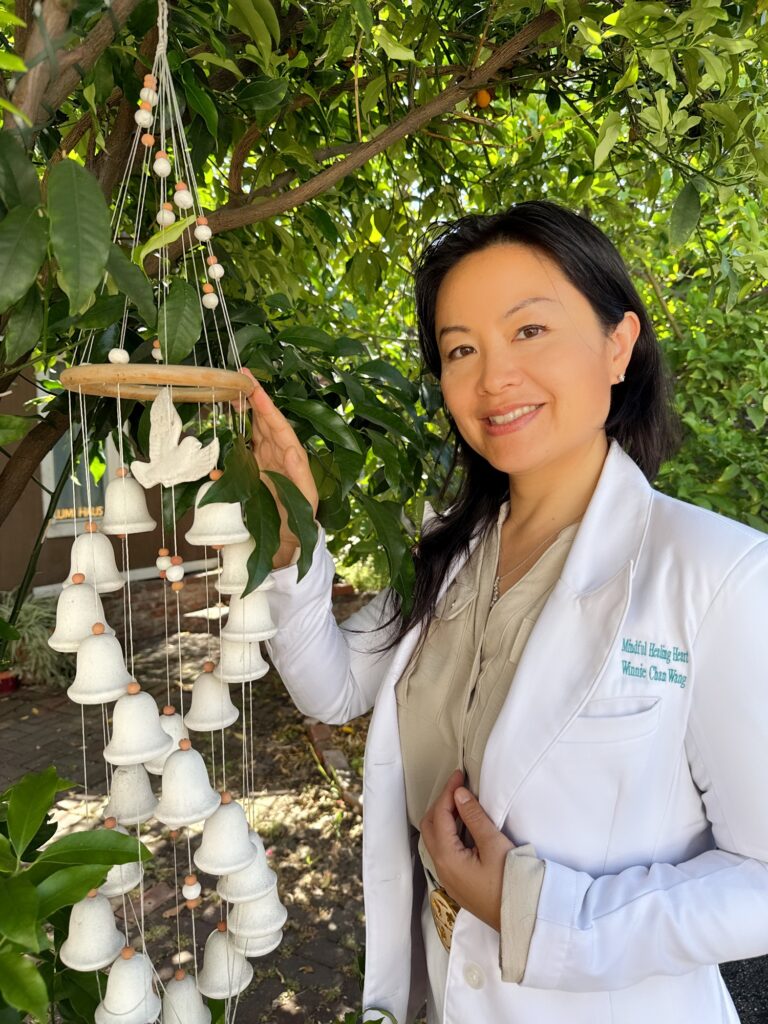
Every session begins with a thoughtful conversation rather than a one-size-fits-all protocol. Dr. Winnie Chan Wang, an MIT-trained engineer, licensed acupuncturist, Medical Intuitive, and Reiki practitioner, takes time to understand each client’s unique health story, what they’re experiencing, how long it’s been present, and how it may be affecting their sleep, digestion, energy, emotions, hormones, and daily life. Rather than viewing symptoms in isolation, she looks for the underlying patterns that connect them. This whole-person approach allows each Reiki-infused acupuncture session to be thoughtfully personalized, supporting not only symptom relief but also the body’s natural ability to restore balance and resilience.
From there, sessions typically move through:
- Breathwork, which helps gently shift the nervous system toward a calmer, more relaxed state before any hands-on or energetic healing begins.
- Medical Intuitive guidance, which Winnie may use to identify areas that seem energetically tense, depleted, or out of balance, providing an additional perspective alongside your health history, symptoms, and physical findings. These intuitive impressions are never used as a medical diagnosis but instead help inform a more personalized, whole-person approach to care.
- Acupuncture and Reiki, combined, work together to support both the body’s physiological processes and the energetic patterns that may contribute to imbalance.
- Integration guidance, including personalized reflections from the session and practical recommendations, such as herbs, gentle movement, journaling, or breathing exercises, to help support healing in the days ahead.
It’s common to feel warmth, tingling, emotional release, or simply the kind of deep rest that’s been hard to access elsewhere. Healing tends to continue unfolding for hours or days after the session ends.
Who Tends to Benefit
Reiki-infused acupuncture can be a meaningful support for people navigating:
- Chronic stress, anxiety, or a nervous system stuck in overdrive
- Chronic pain, especially in the jaw, neck, shoulders, lower back, hips, or gut
- Fertility challenges, perimenopause, or hormonal imbalance
- Insomnia or unrefreshing sleep
- Burnout, caregiver fatigue, or emotional exhaustion
- Grief or major life transitions
- A sense of being physically fine on paper while something still feels off
- Curiosity about energy work, even without prior experience
It’s gentle enough for most people and is designed to work alongside conventional medical care, not replace it.
Is It Safe?
For most people, yes. Reiki is a gentle, non-invasive practice, and when combined with acupuncture, treatment is generally well tolerated for people of all ages. Sessions involve standard acupuncture needling performed by a licensed acupuncturist, along with light touch or hands held just above the body during Reiki. There are no medications, chemicals, or forceful manipulations involved. Before treatment begins, Dr. Winnie Chan Wang reviews your medical history, current health concerns, and any conditions or medications that may require modifications to ensure your care is safe and personalized. Reiki-infused acupuncture can often be integrated alongside conventional medical care and other wellness practices, though it is intended to complement, not replace, appropriate medical treatment.
If you are pregnant, have a bleeding disorder, take blood-thinning medication, have a pacemaker or implanted medical device, or have any significant medical condition, please let Dr. Winnie Chan Wang know before your session so your treatment can be tailored to your individual needs. Bringing relevant medical records, lab results, imaging reports, or previous diagnoses to your first appointment can help provide a more complete understanding of your health. Reiki-infused acupuncture is designed to complement, not replace, conventional medical care, and maintaining open communication with your primary healthcare providers is encouraged to support safe, coordinated care.
Where Science and Healing Meet
Reiki-infused acupuncture brings together two long-standing healing traditions alongside a growing body of scientific research exploring how the body heals. While researchers are still investigating exactly how Reiki, acupuncture, and the nervous system interact, studies suggest that acupuncture can influence pain pathways, circulation, and autonomic nervous system regulation, while Reiki has been associated with reduced perceived stress and increased relaxation in some clinical settings. Healing is likely the result of multiple biological and psychological processes working together rather than a single mechanism. For many people, what matters most is the experience itself: sleeping more deeply, feeling less burdened by stress, moving with greater ease, and rediscovering a sense of calm, balance, and resilience that allows them to engage more fully with life.
Sometimes healing isn’t about eliminating a single symptom. It’s about creating enough physical and energetic safety for the whole system to recalibrate.
Frequently Asked Questions
Reiki-infused acupuncture is an integrative treatment that combines two complementary healing approaches in a single session. Acupuncture involves the gentle placement of fine needles at specific points along the body’s meridians to support its natural healing processes, while Reiki is a gentle energy-healing practice intended to promote relaxation and encourage balance in the body’s life-force energy. Rather than being offered as separate treatments, the two are thoughtfully integrated to support physical, emotional, mental, and energetic well-being, creating a calming experience that helps many people feel more grounded, relaxed, and connected.
Research suggests that both acupuncture and Reiki can independently support relaxation, reduce perceived stress, improve sleep, and enhance overall well-being. Acupuncture has also been studied for its effects on pain management and autonomic nervous system regulation. While the combined use of Reiki and acupuncture has not yet been extensively researched, many practitioners believe the two may work in complementary ways by helping the body shift from a chronic stress response toward a more balanced, restorative state. More research is needed to fully understand their combined mechanisms, but many people report feeling calmer, more grounded, and better able to cope with both physical and emotional challenges after treatment.
This is a thoughtful and common question, and the honest answer is that science does not yet fully understand all of the mechanisms behind either Reiki or acupuncture. However, research has shown that acupuncture produces measurable physiological effects, including changes in pain pathways, autonomic nervous system activity, and the release of certain neurotransmitters. Reiki has been associated with reduced perceived stress and increased relaxation in some studies, though more high-quality research is needed to understand how it works. Healing is likely influenced by multiple factors, including the body’s relaxation response, therapeutic presence, and mind-body interactions, rather than any single mechanism. Whatever the exact explanation, many people report feeling calmer, sleeping better, experiencing less pain, and leaving treatment more emotionally balanced than when they arrived.
Many people seek Reiki-infused acupuncture to support fertility, menstrual health, perimenopause, menopause, and other hormonal concerns. Acupuncture has been studied for its potential to support reproductive health by influencing the nervous system, improving blood flow to the pelvic region, and helping regulate the body’s hormonal signaling pathways. Reiki may complement these effects by encouraging deep relaxation and supporting emotional well-being, which can be especially valuable during times of hormonal change or the fertility journey. While neither therapy should be considered a treatment for infertility or hormonal disorders on its own, many people choose to integrate them alongside conventional medical care as part of a comprehensive, whole-person approach to health.
Everyone’s experience is unique, and there is no “right” way to experience Reiki-infused acupuncture. Some people notice warmth, tingling, gentle pulsing, or a feeling of energy moving through the body. Others experience deep relaxation, slower breathing, emotional release, or the sensation of long-held tension beginning to soften. Some simply drift into a restful, meditative state or even fall asleep. Others may notice very little during the session itself but feel calmer, sleep more deeply, or experience gradual improvements in the days that follow. Whatever your experience, the focus is on creating a safe, supportive environment where your body can relax and naturally move toward greater balance and healing.
Mindful Healing Heart, led by Winnie Chan Wang, offers Reiki-infused acupuncture at 2801 E Foothill Blvd, Pasadena, CA 91107. Initial sessions are $260, with follow-up sessions at $150. You can book by calling 626-642-8993.