
Quick Overview
Sleep is one of the body’s most powerful forms of healing, yet for many people it has become frustratingly out of reach. If you struggle to fall asleep, wake frequently during the night, or wake up feeling exhausted despite spending hours in bed, your body may be asking for deeper support. At Mindful Healing Heart, we look beyond sleepless nights to understand why your nervous system isn’t able to rest. Through Reiki-infused acupuncture, we help calm the stress response, regulate the nervous system, and support the body’s natural sleep rhythms. Research suggests acupuncture may improve sleep quality, reduce nighttime waking, and support healthy melatonin production, while also addressing underlying contributors such as stress, anxiety, hormonal changes, digestive imbalances, and chronic pain. Many clients begin sleeping more deeply within the first few sessions, while long-standing insomnia often improves steadily with consistent, personalized care. Our goal isn’t simply to help you sleep tonight—it’s to help your body remember how to rest, restore, and heal naturally.

Sleep is not something you force. It’s something your body allows when it finally feels safe enough to rest. At Mindful Healing Heart, acupuncture for insomnia is designed to help restore that sense of safety by calming the nervous system, supporting healthy stress regulation, and encouraging the body’s natural sleep rhythms. Research suggests acupuncture may help regulate cortisol, support melatonin and serotonin production, and improve overall sleep quality. Yet the real question isn’t simply, “How do I fall asleep?” Why has my body forgotten how to sleep in the first place? For many people, the answer lies beneath the surface, in chronic stress, anxiety, hormonal changes, digestive imbalance, pain, or years of living in survival mode. That’s why our approach looks beyond the sleepless nights to understand the whole person. Many clients come to us after trying medications, supplements, or countless sleep strategies with little lasting success. Our goal isn’t simply to help you sleep tonight. It’s to help your body remember how to rest, restore, and heal naturally, so peaceful sleep becomes a reflection of deeper balance rather than something you have to chase.
Why Is Sleep So Hard and Why Do Conventional Approaches Often Fall Short?
Insomnia is one of those conditions that sounds simple until you are living with it. Then it becomes one of the most exhausting, demoralising, and isolating experiences a person can have.
Insomnia is rarely just about sleep. More often, it’s a reflection of a body that has been carrying too much for too long. Chronic stress and anxiety can keep the nervous system on high alert long after your head touches the pillow. Hormonal changes during perimenopause and menopause may disrupt the body’s natural sleep rhythms. Ongoing pain makes it difficult to relax deeply, while digestive imbalances can affect the gut-brain connection that plays an important role in healthy sleep. Many people eventually turn to sleep medications in search of relief. While these can be helpful for some, they may also come with unwanted side effects or may not address the underlying reasons sleep became difficult in the first place. At Mindful Healing Heart, we gently ask a different question: What is your body trying to tell us? By calming the nervous system and supporting the body’s natural ability to restore balance, our goal is not simply to help you fall asleep, but to help you rediscover the deep, restorative rest your body was designed for.
In Traditional Chinese Medicine, insomnia is understood as a sign that the mind and body have fallen out of harmony. We describe this as the Shen, often translated as the mind, heart, or spirit, not being able to settle peacefully at night. While the language is ancient, the experience is deeply familiar: lying in bed exhausted but unable to quiet your thoughts, waking at 2 or 3 a.m. with your mind already racing, or feeling physically tired while your nervous system refuses to let go. Rather than seeing insomnia as a problem to suppress, Traditional Chinese Medicine asks a deeper question: What is keeping the body from feeling safe enough to rest? At Mindful Healing Heart, that question guides every treatment. By restoring balance to the nervous system and addressing the underlying patterns contributing to sleeplessness, we help the body remember what deep, restorative sleep feels like again.
Sleep is almost never the only thing asking for attention. Over the years, Winnie has found that insomnia is often woven together with jaw clenching, digestive issues, anxiety, hormonal changes, and a nervous system that has been living in survival mode for far too long. These are rarely separate problems, they are different expressions of the same underlying imbalance. That’s why treatment at Mindful Healing Heart doesn’t focus only on helping you sleep. It supports the whole system. As the nervous system begins to feel safe, the jaw softens, digestion becomes more settled, hormones often find greater balance, and sleep begins to return naturally. When we care for the whole person instead of chasing individual symptoms, healing has a beautiful way of unfolding in many areas of life at once.
How Does Acupuncture for Insomnia Actually Work in the Body?
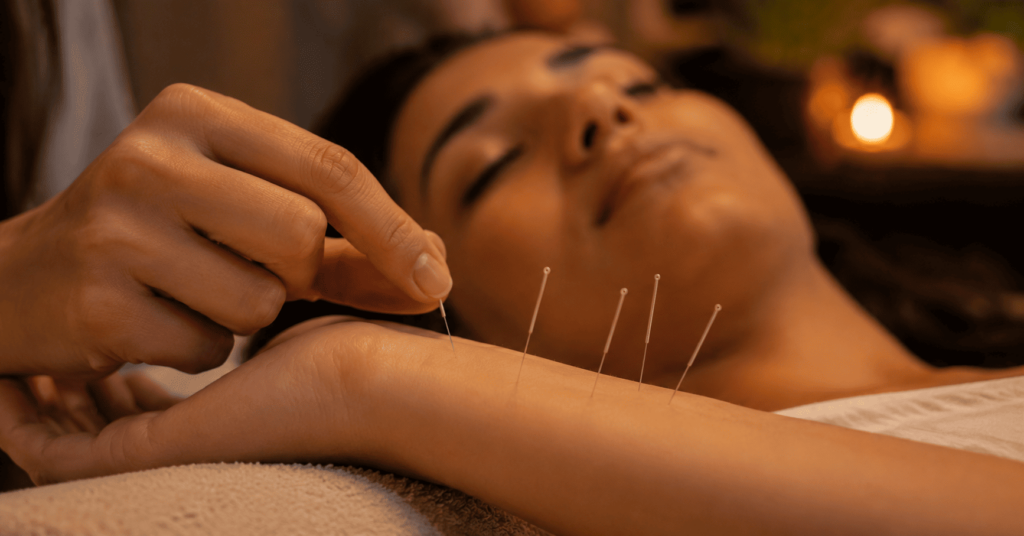
What does acupuncture do to the nervous system during sleep?
What does acupuncture do to the nervous system while you sleep? One of acupuncture’s greatest gifts is helping the body shift from “fight or flight” into “rest and repair.” Using fine, sterile needles placed at carefully selected points, treatment encourages the nervous system to relax, making it easier for the body to let go of the constant state of alertness that so many people live with. Research suggests acupuncture may support healthy melatonin production, influence serotonin and other neurotransmitters involved in sleep, and help regulate the body’s stress response, including cortisol. As the nervous system begins to feel safe again, many clients notice they fall asleep more easily, stay asleep longer, and wake feeling more refreshed. At Mindful Healing Heart, we don’t force sleep to happen, we help create the conditions that allow your body to do what it was designed to do all along: rest, restore, and heal.
The encouraging news is that research continues to support what many people experience in the clinic. Multiple clinical studies and systematic reviews suggest that acupuncture can improve sleep quality, help people fall asleep more easily, reduce nighttime waking, and increase total sleep time. It has also been associated with reductions in anxiety and a favorable safety profile when used as part of a comprehensive care plan. Organizations such as the Sleep Foundation recognize acupuncture as a complementary approach that may benefit some people with insomnia. At Mindful Healing Heart, we see these findings as part of a larger picture. The goal isn’t simply to help you get more hours of sleep, it’s to help restore the balance your body needs so restful, restorative sleep can become natural again.
What do TCM meridian patterns have to do with insomnia?
What do meridians have to do with sleep? In Traditional Chinese Medicine, healthy sleep depends on the body being in balance. The Heart system is associated with a calm mind and peaceful sleep. The Kidney system represents the body’s deepest reserves of energy and restoration. The Liver system helps emotions and energy flow smoothly throughout the body. When these systems become depleted, overworked, or out of balance, the mind may stay busy long after the lights go out. You might feel exhausted, yet unable to fall asleep, wake repeatedly during the night, or find yourself lying awake with racing thoughts. At Mindful Healing Heart, acupuncture is used to gently restore harmony among these systems, helping the nervous system settle and creating the conditions for deep, restorative sleep. Rather than treating insomnia as an isolated symptom, we ask what your body needs in order to feel safe enough to truly rest.
Four specific patterns show up most commonly in practice. Heart and Kidney disharmony produces difficulty falling asleep and frequent night waking. Liver qi stagnation produces stress-driven insomnia and that characteristic waking between 1 and 3am. Yin deficiency produces night sweats, hot flashes, and restless, unsatisfying sleep. Spleen deficiency produces poor sleep paired with fatigue and digestive symptoms.
These are not abstract categories. They are lived experiences with a clear clinical path forward.
How Does Acupuncture Compare to Other Approaches for Insomnia?
Here is how acupuncture fits within the full picture of sleep support, and why for many people it reaches what other approaches cannot.
| Approach | How It Helps | Addresses Root Cause | Side Effects | Works Alongside Acupuncture |
| Acupuncture | Regulates the nervous system, cortisol, melatonin, and serotonin through meridian stimulation | Yes, supports the whole body and root imbalance | Minimal, mild soreness possible | Core treatment approach |
| Reiki-Infused Acupuncture | Adds emotional and energetic healing, calming the heart chakra and clearing energetic blockages | Yes, works at a deeper emotional and energetic level | Minimal | Combines physical and energetic support in one session |
| Sleep Medication | Chemically sedates the nervous system | No, mainly symptom management | Dependency, dizziness, emotional blunting | Acupuncture may help support gradual dose reduction |
| CBT-I Therapy | Helps change thought patterns and sleep behaviours | Partially | None | Acupuncture may improve nervous system regulation and relaxation |
| TCM Herbal Medicine | Supports Heart, Kidney, and Liver systems alongside acupuncture | Yes, pattern-based treatment | Minimal when prescribed correctly | Often combined with acupuncture sessions |
| Meditation and Breathwork | Calms the nervous system temporarily | Partially | None | Acupuncture may deepen relaxation and stillness |
When Insomnia Goes Deeper Than Sleep: A Real Clinical Picture
One client reminds me that insomnia is almost never just about sleep. He came to Mindful Healing Heart after nearly twenty years of restless nights. Every evening he would go to bed exhausted, yet struggle to fall asleep. When he finally drifted off, he would wake around three or four in the morning, often needing to use the restroom. Once awake, his mind would begin racing, and sleep rarely returned.
But as we talked, it became clear that sleep was only one part of the story.
He had lived with digestive issues for years, including a history of SIBO and H. pylori. His abdomen often felt bloated and uncomfortable. He experienced chronic pain through his hips, groin, buttocks, and lower legs. His energy was low, his thinking felt cloudy, and even after a full night in bed, he never felt restored.
What stood out most wasn’t any one symptom. It was how every system in his body seemed to be asking for help at the same time.
Rather than treating insomnia as an isolated problem, we looked at the bigger picture. His nervous system had been living in survival mode for so long that his body no longer remembered how to settle into deep, restorative rest. That became the focus of our work together, not simply helping him sleep, but helping his whole system remember what it feels like to feel safe, balanced, and truly restored.
He practiced walking, chair Qi Gong, meridian tapping, and pranayama breathing. He was eating carefully, avoiding gluten, sugar, and dairy. He was doing everything right by conventional measures. And he still could not sleep.
From a Traditional Chinese Medicine perspective, his body revealed a pattern I see often in people who have lived with chronic stress for many years. His assessment suggested that his mind had been carrying far more activity than his body could settle. In TCM, we describe this as the Heart being unable to fully calm while the Kidney system, which represents the body’s deepest reserves of energy and restoration, had become depleted. His digestive symptoms reflected another common pattern: emotional stress affecting the smooth flow of energy throughout the body. Although these ideas come from an ancient medical system, they closely mirrored his lived experience, an active mind that couldn’t switch off, a body that never felt deeply rested, and a nervous system that had forgotten what true relaxation felt like. Rather than seeing his insomnia, digestive discomfort, fatigue, and pain as separate problems, we recognized them as different expressions of the same underlying imbalance. That understanding became the foundation of his treatment plan.
One of the most fascinating parts of his healing journey was seeing how closely his digestion and sleep were connected. At Mindful Healing Heart, we often see that when the gut is struggling, restful sleep becomes much harder to find. From a Traditional Chinese Medicine perspective, his digestive system wasn’t able to nourish his body as effectively as it needed to, leaving him feeling tired during the day but unable to settle into deep, restorative sleep at night. His pattern of waking between 3:00 and 4:00 a.m. also reflected a common TCM pattern in which emotional stress and constrained energy can interrupt sleep during the hours traditionally associated with the Liver meridian. Rather than viewing his insomnia, digestive discomfort, fatigue, and mental fog as separate conditions, we understood them as different expressions of the same underlying imbalance. As we supported his nervous system, digestion, and overall energy together, his body gradually began to remember what it felt like to rest more deeply.
His treatment was designed to support the whole system, not just his sleep. Acupuncture points were carefully selected to calm the nervous system, support healthy digestion, restore the body’s natural restorative energy, and encourage the mind to settle more peacefully at night. When appropriate, a personalized Traditional Chinese Medicine herbal formula was recommended to help soothe digestion, reduce bloating, and support his body’s overall balance. Throughout the session, Reiki was gently integrated to create a deeper sense of calm and help his nervous system shift from constant vigilance into rest and repair. Every part of the treatment worked toward the same goal: helping his body feel safe enough to release tension, restore balance, and remember how to sleep naturally again.
Over the weeks that followed, he began noticing changes that reached far beyond sleep. His digestion became more settled, with less bloating and greater comfort after meals. As his gut health improved, his nights gradually became less interrupted. The familiar pattern of waking between 3:00 and 4:00 a.m. began to ease, and falling asleep no longer felt like such a struggle. He also described feeling clearer mentally, with less of the brain fog that had accompanied him for years. While every healing journey is unique, his experience reflected something we often see at Mindful Healing Heart: when the nervous system, digestion, and emotional well-being are supported together, sleep frequently begins to improve naturally. Rather than chasing one symptom at a time, we helped his body restore balance as a whole, and restful sleep became one expression of that deeper healing.
Sleep is never just about sleep. It reflects the health of the whole person. When digestion is out of balance, the nervous system often struggles to relax. When the body has been carrying chronic stress for years, the mind can remain alert long after the lights go out. At Mindful Healing Heart, we often see the jaw, gut, and pelvis holding these patterns together. A clenched jaw, an unsettled digestive system, and a body that no longer feels safe enough to fully rest are often different expressions of the same underlying imbalance. That’s why our approach goes beyond helping you get more hours of sleep. Through Reiki-infused acupuncture, we support the nervous system, digestion, and the deeper patterns that connect them, creating the conditions for truly restorative sleep. When the whole body begins to feel safe, supported, and in balance, peaceful sleep often returns as a natural expression of that healing.
What Actually Happens During Acupuncture Sessions for Sleep at Mindful Healing Heart?
What happens at the first session?
Every healing journey begins with a conversation, because your story matters. Winnie takes time to understand not only how you’re sleeping, but also what your body has been carrying. Together, you’ll explore your sleep patterns, stress levels, emotional well-being, digestion, hormones, pain, lifestyle, and anything else that may be influencing your ability to rest. She then performs a gentle Traditional Chinese Medicine assessment by examining your pulse and tongue, offering insight into your body’s unique patterns of balance and imbalance. From there, Winnie integrates her Medical Intuitive approach to further personalize your care. Rather than following a standard insomnia protocol, every treatment is thoughtfully designed around your unique story and the underlying patterns that may be keeping your nervous system from feeling safe enough to sleep. Because two people can have the same sleepless nights, and need completely different paths to healing.
What does a session feel like?
Most people are surprised by how relaxing it is. Winnie gently places a small number of ultra-fine, sterile needles at carefully selected points based on what your body needs that day. Many of these points help calm the nervous system, support deep restoration, and encourage healthy sleep. Throughout the session, Reiki is seamlessly woven into the treatment, creating a quiet space where both the body and mind can begin to let go. You’ll then rest comfortably for about 20 to 40 minutes, often with soft music and a warm, peaceful atmosphere. As your breathing slows and your muscles soften, many clients drift into a deeply meditative state, and many fall asleep on the treatment table. For people who haven’t been able to truly relax in months or even years, that first peaceful nap often feels like a homecoming. It’s a gentle reminder that the body already knows how to rest. Sometimes it simply needs the right conditions to remember.
How quickly does acupuncture work for insomnia?
Every person’s sleep story is different, but many clients begin noticing meaningful changes within the first few sessions. Sometimes the first signs are falling asleep more easily, waking less often during the night, or simply feeling calmer and more rested in the morning. For long-standing insomnia, healing often unfolds gradually as the nervous system learns to relax again. Research suggests the greatest improvements are often seen after a series of treatments, and many clients choose occasional maintenance sessions to support healthy sleep and overall well-being.
Healing doesn’t end when you leave the treatment room. A few simple habits can gently reinforce your body’s natural sleep rhythm: keeping a consistent bedtime, reducing screen time before bed, limiting caffeine later in the day, eating lighter evening meals, spending time in natural morning sunlight, and practicing gentle breathing or relaxation exercises. These small daily choices, combined with acupuncture, often help the body settle into deeper, more restorative sleep.
Your safety is always our priority. Acupuncture is a gentle, well-established therapy with very few side effects. Occasionally, mild soreness or a small bruise may occur where a needle was placed, but these usually resolve quickly. If you are pregnant, taking blood-thinning medication, have a bleeding disorder, use a pacemaker, or have any significant medical condition, please let Winnie know before your session so your treatment can be thoughtfully tailored to your needs. We also encourage all clients to keep their healthcare providers informed, as acupuncture is designed to work alongside, not replace, your existing medical care.
At Mindful Healing Heart, our goal isn’t simply to help you get through another night. It’s to help your body remember how to rest deeply, restore naturally, and wake with the energy to fully enjoy your life.
Can Anything Be Done at Home Between Sessions to Support Better Sleep?

Absolutely. While nothing replaces a personalized acupuncture treatment, a few simple acupressure techniques can gently support your nervous system between visits. Think of them as small daily reminders to your body that it’s safe to relax.
✨ Yintang (Third Eye)
Located between the eyebrows, just above the bridge of the nose, this calming point is wonderful when your mind won’t stop racing. Using one or two fingers, apply gentle circular pressure for 1–2 minutes while taking slow, relaxed breaths.
✨ Anmian (Peaceful Sleep)
Found just behind the earlobe in the soft hollow near the base of the skull, this point is traditionally used to encourage restful sleep. Gently massage the area for 2–3 minutes while lying comfortably in bed, allowing your shoulders and jaw to soften with each breath.
✨ Shenmen (Spirit Gate)
Located on the inner wrist, below the little finger, Shenmen is one of the most beloved acupressure points for easing stress, quieting overthinking, and settling the mind. Apply gentle thumb pressure for 1–2 minutes on each wrist before bedtime.
These simple practices work beautifully alongside other healthy sleep habits, such as dimming the lights in the evening, limiting screens before bed, spending a few minutes in quiet reflection or gratitude, and taking slow, deep breaths. They aren’t meant to force sleep to happen. Instead, they help create the conditions that allow your nervous system to soften and your body to remember what it already knows how to do.
At Mindful Healing Heart, we believe healing continues long after you leave the treatment room. Sometimes the smallest rituals, practiced consistently with kindness toward yourself, become the ones that make the biggest difference.
Ready to Finally Get the Sleep the Body Has Been Asking For?
If you’ve been longing for a good night’s sleep, know this: your body is not working against you. It’s doing its best to protect you. Sometimes it has simply been carrying stress, pain, hormonal changes, or emotional burdens for so long that it no longer remembers how to fully rest. At Mindful Healing Heart, we don’t see insomnia as something to fight, we see it as your body’s way of asking for deeper support. Through Reiki-infused acupuncture, we gently care for the nervous system, digestion, hormones, and the whole person, creating the conditions for restful sleep to return naturally. Whether you’ve struggled for months or for decades, there is always hope.
If this resonates with you, we’d be honored to walk alongside you. Book your appointment at MindfulHealingHeart.com, or call or text (626) 642-8993. Healing begins with a conversation, and sometimes the first peaceful night’s sleep begins with feeling truly seen, heard, and cared for. Your body already knows how to rest. Together, we’ll help it remember.
Frequently Asked Questions
Yes. Research suggests acupuncture can be an effective complementary treatment for insomnia. It helps regulate the nervous system, supports the body’s natural stress response, and may promote healthy production of sleep-related hormones such as melatonin. Studies have found that acupuncture can improve sleep quality, reduce nighttime waking, and increase total sleep time, with minimal side effects when performed by a licensed acupuncturist. At Mindful Healing Heart, we look beyond sleepless nights to understand what’s keeping your body from resting, whether it’s stress, anxiety, hormonal changes, chronic pain, or digestive imbalance. Our goal isn’t simply to help you sleep more. It’s to help your body feel safe enough to rest, restore, and heal naturally.
Every person’s sleep journey is different. Some clients notice deeper sleep and a greater sense of calm within the first one to three sessions, while long-standing insomnia often improves more gradually over 6 to 12 sessions with consistent care. At Mindful Healing Heart, there is no one-size-fits-all treatment plan. Every session is personalized to your unique pattern, addressing the underlying factors that may be affecting your sleep, whether that’s stress, anxiety, hormonal changes, chronic pain, digestive issues, or nervous system imbalance. Our goal is not simply to help you sleep tonight, but to restore the balance that allows restful, restorative sleep to come naturally.
Every treatment is personalized, but acupuncture points that help calm the nervous system and support restful sleep are commonly selected along the Heart, Kidney, Liver, and Spleen meridians. Winnie may also include well-known points such as Shenmen (Spirit Gate) to quiet the mind, Yintang (Third Eye) to ease mental tension, and Anmian (Peaceful Sleep) to encourage deep relaxation. Rather than following a standard sleep protocol, each session at Mindful Healing Heart is tailored to your unique pattern of imbalance, helping your body restore the conditions needed for peaceful, restorative sleep.
Yes. Insomnia is often a symptom of something deeper rather than a condition on its own. Chronic stress, anxiety, digestive imbalances, ongoing pain, and nervous system dysregulation can all make it difficult to fall asleep or stay asleep. At Mindful Healing Heart, we look beyond the sleepless nights to understand what is keeping your body from fully resting. Through Reiki-infused acupuncture, we help calm the nervous system, support healthy digestion, ease pain, and restore balance throughout the body. When these underlying patterns begin to improve, many clients find that restful sleep returns naturally as part of their overall healing.
At Mindful Healing Heart, we believe insomnia is rarely just about sleep. Every session is designed to understand the whole person, not only your sleep patterns, but also your stress, emotions, digestion, hormones, pain, and the underlying patterns that may be keeping your nervous system from fully resting. Winnie Chan Wang, MSOM, L.Ac., integrates acupuncture with Reiki and her Medical Intuitive approach to create a treatment plan that is uniquely tailored to you. Rather than following a standard insomnia protocol, each session supports both the physical and emotional aspects of healing, helping your body shift out of survival mode and back into its natural state of rest, repair, and restoration. The goal isn’t simply to help you sleep better tonight, it’s to help you rediscover the deep, restorative sleep your body was designed for.