Snapshot
The postpartum period, often called the “fourth trimester,” is a time of profound physical, emotional, and hormonal adjustment. Postpartum acupuncture offers gentle, individualized support as mothers recover from childbirth and adapt to caring for their newborns. It may help with sleep, fatigue, pain, and emotional well-being, although research remains limited, particularly for postpartum mood concerns.
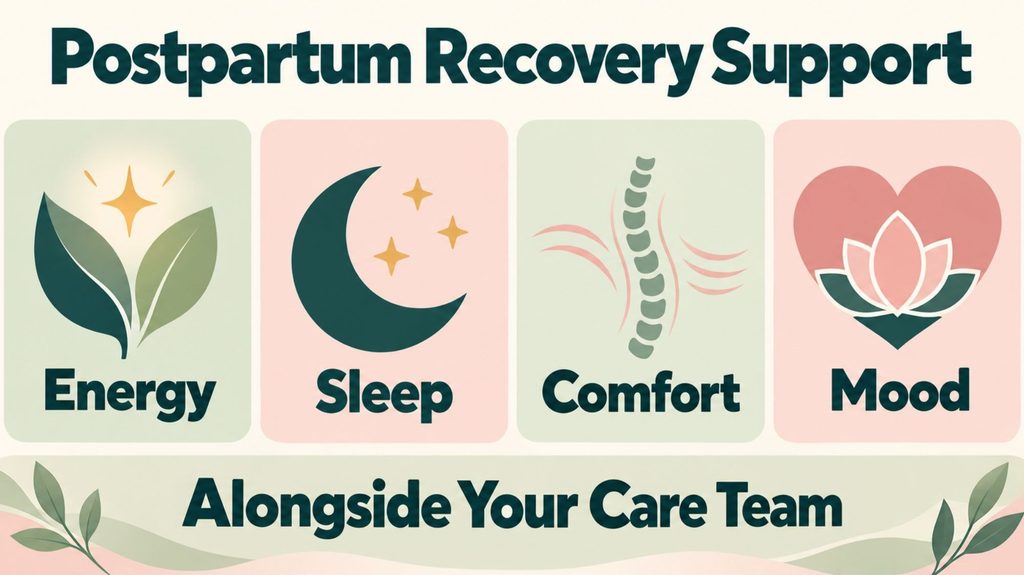
- Restore energy: May help ease fatigue and support postpartum recovery.
- Improve rest: May promote relaxation and better sleep quality.
- Ease discomfort: May help manage neck, back, and other postpartum pain.
- Support emotional balance: May complement care for stress and mood changes.
- Personalized care: Treatment timing and positioning can be adapted to recovery needs and feeding schedules.
- Postpartum acupuncture complements medical and mental health care.
- Always consult your OB-GYN, midwife, or healthcare provider about when to begin, especially after a C-section or complicated delivery. It does not replace treatment for postpartum depression or anxiety.
The Fourth Trimester Is Real, Even If No One Warned You

Somewhere around the six-week checkup, a lot of new mothers expect to feel like themselves again. When that doesn’t happen, it’s easy to start wondering what’s wrong, or what you’re doing wrong. Nothing is wrong. Recovery after birth was never meant to wrap up in six weeks.
Postpartum acupuncture is one option some women explore during this stretch. It’s a form of acupuncture in Pasadena adapted specifically for the postpartum body, and it’s commonly used alongside regular medical care to support energy, sleep, healing and mood.
The American College of Obstetricians and Gynecologists has called this period the “fourth trimester,” and in a May 2018 committee opinion recommended that new mothers stay in contact with a care provider for up to 12 weeks after birth, not just one follow-up visit. That alone says something: your body isn’t behind schedule. The schedule itself was too short.
What Is Postpartum Acupuncture?
Postpartum acupuncture is traditional acupuncture with the point selection and focus shifted toward recovery after childbirth. In Traditional Chinese Medicine, this period is often framed around rebuilding what practitioners call Qi and Blood, concepts from TCM theory, not a Western medical diagnosis. Sessions tend to focus on energy, healing, mood and the physical strain of caring for a newborn.
It’s worth saying plainly: this is a traditional explanatory framework, not a clinical finding. The research on whether and how well it works is still developing, and the sections below separate what’s been studied from what’s traditional theory.
What Postpartum Acupuncture Is Commonly Used to Support
The weeks and months after giving birth can bring a mix of emotions, physical changes, and everyday challenges. Between broken sleep, feeding, carrying your baby, and finding your own rhythm again, it’s easy to put your needs on the back burner. Postpartum acupuncture may offer some support during this time. Research is still developing, and results vary, but some studies suggest it may help with certain concerns.
- Exhaustion and low energy. Caring for a newborn takes a lot out of you, especially when sleep comes in short stretches. In Traditional Chinese Medicine (TCM), this kind of exhaustion is sometimes described as Blood deficiency. This is a traditional concept, not a medical diagnosis or a measure of your blood levels. Acupuncture sessions may focus on helping you feel more balanced and supported as you recover.
- Sleep that feels out of reach, even when your baby is asleep. Sometimes, even when you finally have a quiet moment, your mind and body just won’t settle. Acupuncture is sometimes used to support relaxation and help you unwind. You can also read more about acupuncture for insomnia.
- Back, neck, hip, and wrist pain from feeding and carrying your baby. Hours spent nursing, bottle-feeding, rocking, and carrying your little one can leave your body feeling sore and strained. Acupuncture may help manage some types of musculoskeletal pain. For more information, see our guide to acupuncture for back pain.
- Pelvic floor recovery. Pregnancy and childbirth place considerable demands on your pelvic floor, whether you had a vaginal birth or a C-section. As your body heals, you may need support with the discomfort or tension that can come with recovery. Learn more about pelvic floor acupuncture and how it may fit into your care.
- Stress, anxiety, and mood changes. The postpartum period can be emotionally demanding, even when you’re happy to welcome your baby. You may feel overwhelmed, anxious, or unlike yourself. These feelings deserve time, attention, and care, so we’ll explore this topic in more detail below.
- Postpartum hair shedding. Finding more hair on your brush or in the shower can be unsettling, but postpartum hair shedding is very common and usually temporary. It often improves as hormone levels settle. Some women explore acupuncture as part of their broader self-care routine during this phase, although evidence that it helps with postpartum hair shedding is limited. You can learn more about acupuncture for hair loss.
Every postpartum experience is different, and acupuncture won’t be the right fit for every concern. Think of it as a possible addition to your care, rather than a guaranteed solution or a replacement for medical support. Your doctor or midwife can help you understand what’s happening in your body and which options may be appropriate for you.
Acupuncture and Postpartum Mood: How It May Help
The postpartum period can bring a mix of emotions that aren’t always easy to put into words. You might feel overwhelmed, anxious, unusually low, or simply unlike yourself. And while these feelings can be difficult to navigate, you don’t have to push through them on your own.
Acupuncture may offer a gentle way to support relaxation and emotional well-being during this time. Some women explore it as part of their postpartum self-care, especially when they’re feeling stressed or finding it hard to unwind. Research into its role in postpartum depression is encouraging in some areas, but the evidence is still limited, and we don’t yet know how effective it is.
It’s important to remember that acupuncture isn’t a proven treatment for postpartum depression or anxiety, and it shouldn’t replace medical or mental health care. If you’re struggling with your mood, reaching out to your doctor or a mental health professional is an important step. Acupuncture may be something you explore alongside that support, if it’s right for you.
Most importantly, you deserve care and understanding during this transition, too. Taking care of yourself isn’t separate from taking care of your baby. It’s part of it.
When Can You Start Acupuncture After Birth?
Every birth and recovery is different, so there isn’t a set timeline for when you can begin acupuncture after having a baby. The right time depends on how you’re healing, how your birth went, and how you’re feeling physically. If you’ve had a C-section or experienced any complications, it’s especially important to give your body the care and time it needs before considering acupuncture.
If you’re thinking about trying it, start by checking with your OB-GYN, midwife, or doctor to make sure it’s appropriate for your stage of recovery. When booking your appointment, let your acupuncturist know about your birth experience and any ongoing discomfort or concerns. This helps them understand your needs and approach your care with your recovery in mind.
What a Postpartum Session Looks Like With a New Baby

Every practice handles this differently, so it’s worth asking directly when you book: whether babies are welcome in the room, how session length and scheduling work around feeding, and how the session is adapted for someone who may not be able to lie still for long. A good first conversation should leave you with clear, specific answers, not guesswork.
Breastfeeding and Acupuncture
If you’re breastfeeding, you may be wondering whether acupuncture is a safe option during this stage. It’s generally considered compatible with breastfeeding, but it’s always a good idea to check with your healthcare provider before starting.
Some research suggests that acupuncture may help support milk supply in women experiencing low milk production, though the evidence is still limited and results can vary. If you’re concerned about your supply, a lactation consultant or healthcare provider can help you understand what’s going on and find the right support for you and your baby.
When booking an acupuncture session, let your practitioner know that you’re breastfeeding. This helps them understand your needs and tailor your care accordingly.
How Often, and for How Long
Most approaches to postpartum acupuncture involve a series of sessions rather than a single visit, since recovery itself unfolds gradually rather than all at once. Ask your practitioner what a realistic rhythm looks like for your specific situation before committing to anything.
What Many New Mothers Describe
The early months of motherhood can leave you feeling exhausted in ways that a little extra sleep doesn’t always fix. Your mind may feel constantly busy, your body may feel different, and finding even a few quiet moments for yourself can seem difficult.
Some new mothers explore acupuncture for a specific concern, such as shoulder tension from feeding or aches from carrying their baby. Along the way, they may also appreciate having a little time to slow down, relax, and focus on their own well-being.
Every mother’s experience is different, of course. Acupuncture won’t feel the same for everyone, but making space for your own care can be a meaningful part of navigating this new chapter.
What You Can Actually Do
- Check timing with your provider first. Confirm acupuncture is appropriate given your birth and current healing.
- Mention everything relevant at intake. Birth type, breastfeeding status, medications and how you’re sleeping all shape the session.
- Ask practical questions before booking. Session length, whether your baby can come, and what a realistic series looks like.
- Give it time. A single session rarely tells the full story; many people need a short series before noticing a pattern.
Safety and Realistic Expectations
Your recovery deserves time, patience, and the right kind of support. If you have an incision that hasn’t healed, heavy bleeding, a fever, or signs of infection, check with your healthcare provider before considering acupuncture. Your health and safety always come first.
The same care applies to your emotional well-being. If you’re experiencing persistent sadness, anxiety, overwhelming thoughts, or thoughts of harming yourself, please reach out to a healthcare professional or mental health provider. You don’t have to manage these feelings alone, and acupuncture should never be your only source of support. If you’re in the US and need immediate help, call or text 988. If you’re in immediate danger, call 911.
It’s also worth remembering that acupuncture isn’t an overnight fix. Everyone responds differently, and research hasn’t established exactly how long it takes to notice a difference. Some people may notice gradual changes over several sessions, while others may not experience the same benefits.
Most importantly, acupuncture is a complementary approach, not a replacement for medical care. It cannot treat serious postpartum complications, such as heavy bleeding or infection, or replace appropriate treatment for postpartum depression and other mental health conditions. Think of it as one possible part of your recovery, alongside the medical care and support you need.
Support Beyond the Needles
Acupuncture is one piece of a much bigger picture. Rest, community and nervous system care all matter too. Mindful Healing Heart’s Women’s Healing Circle meets weekly in Pasadena and on Zoom, offering a space to pause and connect with other women rather than carrying everything alone. Reiki sessions are another option some mothers add alongside acupuncture for additional nervous system support.
If you’re still pregnant and reading ahead, fertility acupuncture and general prenatal support are also worth exploring before birth.
And if burnout, not just postpartum exhaustion, feels like the more accurate word for where you are, the post on signs of burnout in women may be worth a read too.
You Don’t Have to Figure This Out Alone
There’s no single right way to recover after birth, and no fixed timeline you’re supposed to be hitting. If you’re curious whether postpartum acupuncture could fit into your recovery, the simplest next step is a conversation. Book a session or text Winnie directly at 626-642-8993 with any questions first. No pressure, just support when you’re ready for it.
Frequently Asked Questions
It depends on your birth and your recovery, so there’s no single answer that fits everyone. Checking with your OB, midwife or doctor first, and mentioning your birth type when you book, is the most reliable way to find the right timing for you.
It’s generally considered compatible with breastfeeding. A 2024 review suggests it may even support milk supply for some women, though this is limited, review-level evidence rather than a guarantee, so mention that you’re nursing at intake.
Policies vary by practice, so it’s worth asking directly when you book. A good practitioner should be able to give you a clear answer about what’s realistic for your session.
It may be a supportive part of a care plan, but research so far is limited and hasn’t reached high-quality evidence standards. It should never replace medical or mental health care, and if you’re struggling, please reach out to your provider or call or text 988.
Generally yes, once healing allows, but timing depends on your specific recovery. Checking with your surgical provider before booking is the safest first step.